
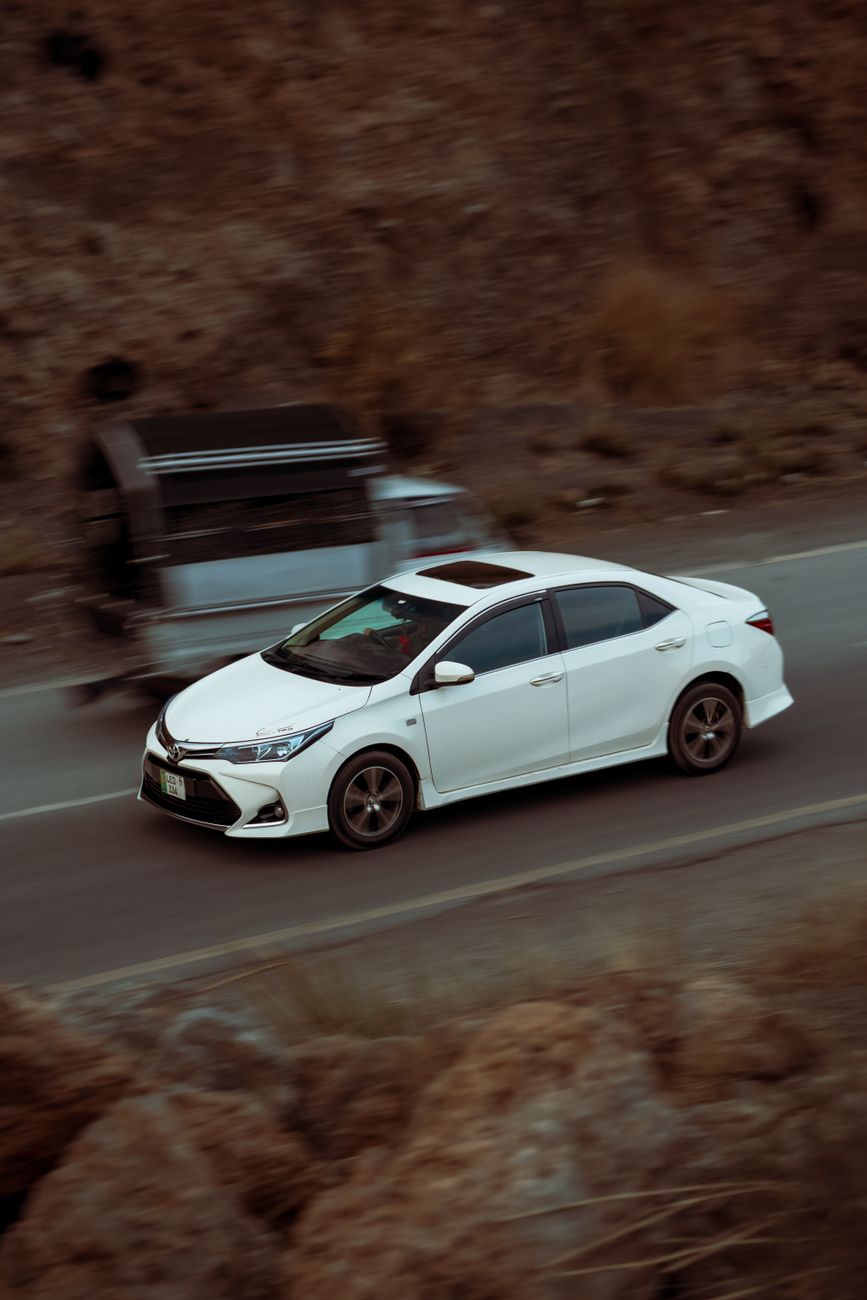

🔄 Last Updated: June 24, 2026 — This article has been updated with the latest developments including the policy’s current approval status, IMF objections, used-car import reform progress, BYD Gharo plant updates, Budget 2026-27 final decisions, and new token tax changes.
What Is Pakistan Auto Policy 2026–31? (Quick Summary)
Pakistan’s Auto Policy 2026–31, formally the Automobiles and Auto Parts Manufacturing Policy 2026–31 (also called AIDEP 2026–31), is the government’s framework to transform the country’s car industry over five years. It succeeds the AIDEP 2021–26, which expired on June 30, 2026.
The policy promises lower import tariffs, major EV incentives, regulated used-car imports, stronger consumer protections, and ambitious production and export targets. But here is the critical update: as of late June 2026, the policy has not been formally approved by the Federal Cabinet. It remains a well-developed draft, stuck between an IMF objection and a ministry-level tariff dispute. Some provisions — particularly used-car import reforms — are already in force through separate notifications.
⚠️ Current Status: The Policy Is Stuck — Here’s Why
This is the most important update since our original article. Three forces have delayed final cabinet approval:
1. IMF Rejected the 1% EV Sales Tax
The policy’s most popular provision — a 1% sales tax on electric vehicles — was rejected by the IMF. The Fund wants the standard 18% GST applied uniformly to all vehicles, preferring targeted direct subsidies over embedded tax exemptions. Since the policy is part of Pakistan’s IMF reform commitments, it cannot be approved until the IMF signs off. The EV tax proposals had “only just gone to the IMF” as of late June 2026.
However — what’s already confirmed in Budget 2026–27: The 1% sales tax on locally assembled EVs has been extended to June 30, 2027. That much is law. The broader 5-year EV rate framework inside the draft policy remains disputed.
2. Ministry-Level Tariff War
The Commerce Ministry wants deeper tariff cuts aligned with Pakistan’s National Tariff Policy (aiming for a 15% long-run ceiling). The Industries Ministry wants to keep a 40% floor on CBU import duties to protect local assemblers. The disagreement is stalling the document. On the biggest engines, the gap between the two ministries’ positions is roughly Rs. 40 percentage points — the kind of difference that eats calendar months.
3. Industry Feeling Sidelined
Parts manufacturers and assemblers complained the draft was being pushed forward without sufficient consultation. A new Motor Vehicle Development Act moving through parliament — which gives the engineering regulator statutory authority and mandates international safety standards from mid-2026 — added to the industry’s anxiety. An industry doesn’t approve quietly of a policy that reshapes its structure without its input.
What Has Actually Changed — Confirmed Updates (June 2026)
✅ Used-Car Import Age Limit — Officially Being Lifted
This is the biggest confirmed change already in motion. The National Assembly’s Standing Committee on Finance was officially informed on June 21, 2026 that the government will remove the five-year age restriction on commercial imports of used vehicles from July 1, 2026, subject to quality, safety (pre-shipment inspection by selected Japanese firms), and environmental standards.
| Year | Additional RD on Commercial Used Imports |
|---|---|
| 2026–27 (from July 1, 2026) | 30% (reduced from 40%) |
| 2027–28 | 20% |
| 2028–29 | 10% |
| 2029–30 | 0% (full equalisation) |
Important: The Personal Baggage Scheme for importing cars was abolished in January 2026. Gift and Transfer-of-Residence schemes survive but are tightened — vehicles must be under three years old, sourced from the country of the applicant’s actual residence, with a long waiting period between imports. The age-limit removal applies only to commercial imports.
✅ Budget 2026–27 Auto Sector: What Passed
The Finance Bill 2026–27 was approved by the National Assembly. Here are the confirmed, enacted auto sector decisions:
| Vehicle Category | Tax Treatment (Enacted) |
|---|---|
| Locally assembled EVs | 1% Sales Tax — extended to June 30, 2027 |
| Hybrid vehicles (locally assembled) | 9% Sales Tax — maintained |
| Conventional petrol cars | 18% GST (unchanged) |
| Imported EVs up to Rs. 20 million | Duty-free (unchanged) |
| Imported EVs Rs. 20–30 million | 30% FED (new) |
| Imported EVs above Rs. 30 million | 40% FED (new) |
| Imported cars 2,000–3,000cc | 40% FED (new) |
| Imported cars above 3,000cc | 41% FED (new) |
| Carbon levy on large ICE vehicles | Up to 19.5% (new) |
✅ Islamabad Token Tax — Major Increase from July 1, 2026
The NA Standing Committee on Finance approved a significant increase in vehicle token tax for Islamabad Capital Territory — the first increase since 2019. The old fixed-rate system is replaced with an invoice value-based system:
- 1,001cc–2,000cc: 0.25% of invoice value annually (a car worth Rs. 5.2 million = ~Rs. 13,000/year)
- 2,001cc and above: 0.35% of invoice value (a car worth Rs. 10 million = ~Rs. 35,000/year)
This affects all Islamabad-registered vehicle owners starting July 1, 2026.
✅ National Tariff Policy — Weighted Average Tariff Cuts Underway
Separate from the auto policy draft, the NA Standing Committee approved the second phase of the National Tariff Policy (NTP) 2025–30. Key figures:
- Weighted average tariff falls from 8.64% (2025–26) to 7.42% (2026–27)
- Target: below 6% by 2030
- Revenue cost of the second-year NTP: Rs. 143.4 billion
- Simple average tariff drops from 16.56% to 13.77% in 2026–27
BYD Pakistan — Gharo Plant Update (June 2026)
BYD’s $150 million manufacturing facility at Gharo, near Karachi — a joint venture with Mega Motor Company (MMC), a Hubco subsidiary — is confirmed on schedule. Key updates:
- Target production start: Q3–Q4 2026 (first vehicles possibly July–August 2026)
- Initial capacity: 25,000 units/year (CKD assembly, scaling to full localization)
- Jobs: 1,100+ direct jobs; significant supply-chain employment
- Finance Minister meeting: In June 2026, Finance Minister Muhammad Aurangzeb met BYD and MMC leadership and reaffirmed full government support
- Charging corridor: BYD-Hubco Green planning Karachi–Peshawar corridor with stations every 200–250 km; targeting 40–50 stations nationwide by end-2026
- Export ambition: Pakistan positioned as a right-hand-drive EV hub for Africa and South Asia
BYD’s current Pakistan lineup — Atto 2 (Rs. 7.29M), Atto 3 (Rs. 8.99M), Seal Dynamic (Rs. 14.79M), Seal Premium (Rs. 16.99M), Sealion 7 (Rs. 15.49M), Shark 6 PHEV (Rs. 19.95M) — all remain unchanged post-Budget 2026–27, as every model falls below the Rs. 20 million duty-free threshold.
Draft Policy Targets — Still the Direction of Travel
Even though the policy is unapproved as a whole, these draft targets remain the government’s stated direction. Treat them as intent, not law:
| Goal | Current Reality | Target by 2031 |
|---|---|---|
| Annual vehicle production | ~56,000 units (recent low) | 500,000+ units |
| Auto exports | A few hundred million USD | ~US$1 billion |
| Local content — small cars | ~50–55% | 80% |
| NEV share of new sales | Small fraction | ~30% by 2030 |
| Charging stations | Sparse | 3,000 by 2030 |
| Auto financing max tenure | 5 years | 7 years |
| Minimum down payment | 20–30% | 15% |
Draft CBU Import Duty Cuts — Indicative Only
These are the tariff reductions outlined in the draft policy. They are proposals, not enacted law. The final numbers could be diluted, particularly for larger engine sizes where the Ministry of Industries and Commerce Ministry are in disagreement:
| Engine Size | Current Duty | Draft Target by 2030 |
|---|---|---|
| Up to 850cc | ~56% | ~35% |
| 851cc–1,000cc | ~71% | ~40% |
| 1,001cc–1,500cc | ~76% | ~45% |
| 1,501cc–1,800cc | ~91% | ~77% |
| 1,801cc and above | ~156% | ~115% (disputed) |
Note: The draft reportedly retains a 40% floor on CBU import duties — meaning even after full implementation, no imported car category would face less than 40% duty. This is the core contradiction with the National Tariff Policy’s longer-term 15% ceiling.
What This Realistically Means for Car Buyers
Will car prices drop soon?
Not immediately, and not dramatically. Tariff cuts — even if approved — have historically been absorbed by rupee depreciation, dealer premiums, and assembler margins before reaching buyers. The more powerful force will be competition: used imports and new brands like BYD forcing incumbent assemblers to compete on price.
Should I buy an EV now?
The policy direction is consistently pro-EV regardless of draft status. The 1% tax on locally assembled EVs is confirmed until June 2027, fuel costs are rising (a new carbon levy makes large ICE vehicles more expensive to run), and BYD’s Gharo plant will bring locally assembled EVs by Q3–Q4 2026, which should gradually reduce prices. The current BYD lineup is competitive — if you drive within cities, the Atto 2 at Rs. 7.29M offers genuine value.
Should I wait for used-car imports?
Commercial used-car imports are already legal and the age limit is being lifted from July 1, 2026. The additional regulatory duty starts at 30% (down from 40%) and falls 10% per year to zero by 2030. You will start seeing more competitively priced used imports in the second half of 2026 — mostly Japanese vehicles (2–6 years old), inspected by certified Japanese pre-shipment firms. Used car prices in the local market have already dipped 5–10% as buyers anticipate this change.
Frequently Asked Questions
Has Pakistan’s Auto Policy 2026–31 been approved?
No — as of June 24, 2026, it has not received Federal Cabinet approval. It is a well-developed draft pending IMF review (over the EV tax rate) and resolution of a ministry-level tariff dispute. Some provisions — especially used-car import liberalisation — are being implemented through separate government notifications.
Why did the IMF block the 1% EV tax?
The IMF wants Pakistan to apply a uniform 18% GST on all vehicles, with any consumer EV support delivered through direct subsidies rather than embedded tax exemptions. The 1% rate is a revenue-foregone item that conflicts with Pakistan’s broader tax broadening commitments under the IMF programme.
Can I commercially import a used car to Pakistan in 2026?
Yes — commercial used-car imports are now legal for registered companies meeting capital (Rs. 350 million+), after-sales service, and safety compliance requirements. The five-year age restriction is being lifted from July 1, 2026. Additional regulatory duty is 30% in 2026–27, falling to zero by 2029–30. The Personal Baggage Scheme was abolished in January 2026.
When will BYD start making cars locally in Pakistan?
BYD’s $150 million Gharo plant (near Karachi) is targeting production in Q3–Q4 2026 — possibly as early as July–August 2026. Initial capacity is 25,000 units/year through CKD (Completely Knocked Down) assembly in partnership with Mega Motor Company (MMC), a Hubco subsidiary.
Will hybrid car taxes increase in Pakistan?
No — hybrid vehicles remain at 9% sales tax for now. The IMF pushed to raise this to 18%, but the NA Standing Committee on Finance maintained the existing rates. This is subject to change in future budgets.
What is Pakistan’s EV adoption target?
The draft policy targets 30% NEV (New Energy Vehicle) adoption by 2030, backed by a plan for 3,000 charging stations and the BYD-Hubco Green Karachi–Peshawar charging corridor. The government has also stated an ambition to convert all vehicle sales to electric by 2030, with a 90% target as an extended goal.
The Bottom Line
Pakistan’s Auto Policy 2026–31 remains the right framework for a market that desperately needs reform. Its goals — phased tariff reduction, EV-first incentives, regulated used imports, and real consumer protections — are the correct diagnosis. The problem is execution and political will.
The most meaningful near-term changes are already happening outside the draft policy itself: used imports are being liberalised, BYD’s plant is going up, and Budget 2026–27 has locked in EV tax relief for another year. Those are real, enacted developments. The full policy, when it passes — in some form — will give them a five-year framework to build on.
Watch for Cabinet approval in July 2026. When it comes, the numbers that survive the IMF and ministry negotiations will be the ones that actually matter. Until then, treat the draft targets as a direction of travel — an honest, ambitious direction, but not a guarantee.
Stay with PakCitizenGuide for live updates as Pakistan’s auto policy enters its final approval stage in July 2026.

