Home Blog Page 47

Intense Hailstorms Lash Islamabad and KP, Causing Widespread Damage

0

Heavy hailstorms and rain battered Islamabad and several districts of Khyber Pakhtunkhwa, damaging vehicles, uprooting trees, and triggering flash floods. Power outages were reported across affected areas. Authorities remain on high alert, with PDMA coordinating emergency response efforts. Climate experts link the extreme weather to worsening climate change patterns.

Severe hailstorms struck Islamabad and KP, damaging vehicles and infrastructure. Authorities are responding to flood risks as experts blame climate change for the extreme weather volatility.

Hailstorm Islamabad, KP weather, Climate change Pakistan

Rs750 Prize Bond Draw Announced: First Prize Winner Takes Home Rs1.5 Million

0

The National Savings Division held the Rs750 prize bond draw on April 15, 2025, in Peshawar. The first prize of Rs1.5 million was claimed by bond number 261227. Three lucky winners received Rs500,000 each, while 1,696 others won Rs9,300 as third prize.

Rs750 prize bond, Prize bond results 2025, National Savings Pakistan

The eagerly awaited Rs750 prize bond draw for April 2025 has been officially announced by the National Savings Division. The draw took place in Peshawar on April 15, and thousands of bondholders across Pakistan tuned in to check their luck.

Prize Details:

  • 1st Prize (Rs1,500,000):
    Lucky bond number 261227 bagged the top prize.
  • 2nd Prize (Rs500,000 each):
    Three winners walked away with half a million rupees each. The winning bond numbers are 204763, 417952, and 622931.
  • 3rd Prize (Rs9,300 each):
    A total of 1,696 winners were selected for the third prize.

Bondholders can claim their prizes by presenting the original bond along with a copy of their CNIC at any National Savings Center or State Bank branch. Claims must be submitted within six years from the draw date to be valid.

If you’ve got a Rs750 bond lying around, now’s the time to check the numbers—you might be holding on to a small fortune!

Sindh Police Announces 144 ASI Jobs Under Shaheed Quota – Apply Online via STS

0

The Sindh Police has announced 144 Assistant Sub Inspector (ASI) positions (BPS-11) under the Shaheed Quota. This recruitment drive is managed by the SIBA Testing Services (STS).​

📝 Key Details:

  • Position: Assistant Sub Inspector (ASI)​
  • Grade: BPS-11​
  • Number of Vacancies: 144​
  • Quota: Reserved for legal heirs of Shaheed (martyred) Sindh Police employees​
  • Application Mode: Online via STS​
  • Application Link: apply.sts.net.pk/?ssid=820

📅 Important Dates:

  • Advertisement Published: April 13, 2025​PaperPK
  • Application Deadline: Not specified; early application is advised​

📍 Eligibility Criteria:

  • Educational Qualifications: Graduation/Postgraduation (e.g., B.A., B.Sc., B.Com., BBA, M.A., M.Sc., MBA, M.Com.)​
  • Domicile: Sindh (Urban/Rural)​
  • Physical Standards: As per Sindh Police requirements (details not specified in the provided information)​

🧾 Application Process:

  1. Visit the official STS application portal: apply.sts.net.pk/?ssid=820
  2. Complete the online application form with accurate information.​
  3. Submit the application before the closing date.​

This is a significant opportunity for the families of martyred Sindh Police personnel to continue their legacy of service. Ensure all required documents are prepared and submitted promptly.

Syngenta Pakistan Launches 2-Year Apprenticeship Program 2025 – Apply Now!

0

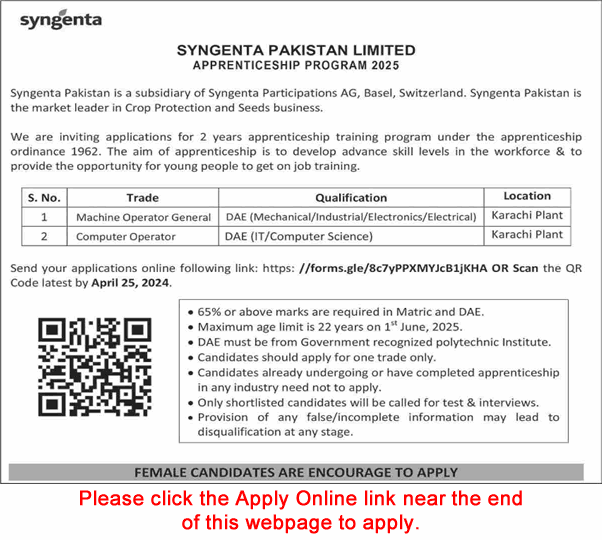
Syngenta Pakistan has announced its 2-year Apprenticeship Program 2025 at the Karachi Plant. This opportunity is open to fresh DAE graduates in Mechanical, Electrical, Electronics, and IT fields. Female candidates are encouraged to apply before the May 25, 2025 deadline through an online form.

Apprenticeship Program, Syngenta Pakistan, DAE Jobs


Full Details:

Syngenta Pakistan has officially opened applications for its Apprenticeship Program 2025. This 2-year program is based at their Karachi Plant and offers skill-building opportunities in two trades:

  • Machine Operator General – For DAE holders in Mechanical, Industrial, Electrical, or Electronics.
  • Computer Operator – For DAE holders in IT or Computer Science.

🎓 Eligibility Criteria:

  • Minimum 65% marks in both Matric and DAE.
  • Maximum age: 22 years as of July 1, 2025.
  • Must hold a DAE from a government-recognized polytechnic institute.
  • Only one trade can be selected per applicant.
  • Candidates already enrolled or completed any other apprenticeship are not eligible.
  • Female applicants are strongly encouraged to apply.

🗓️ Deadline to Apply:

May 25, 2025

📝 How to Apply:

Fill out the official online application form here:
https://forms.gle/8c7yPPXMYJcB1jKHA

This is a great opportunity for fresh DAE graduates looking to kickstart their careers in a reputable organization like Syngenta. Don’t miss out!

🎬 Cinema in Islamabad and Rawalpindi: A Complete Guide to Movie Theaters


Looking for the best places to catch the latest blockbusters or enjoy a cozy movie night? The cinema in Islamabad and Rawalpindi offers a diverse range of theaters, each providing unique experiences for film enthusiasts. Whether you’re seeking luxury seating, state-of-the-art sound systems, or family-friendly environments, the twin cities have something for everyone.​


📍 Cinemas in Islamabad

1. Centaurus Cineplex

  • Location: 4th Floor, Centaurus Mall, 1 Jinnah Avenue, F-8, Islamabad​
  • Contact: 051-111-626-384​
  • Google Maps: View Location

Centaurus Cineplex boasts multiple screens with advanced projection systems and comfortable seating. It’s a popular choice for both local and international films.​

2. The Arena

  • Location: Phase 4, Bahria Town, Islamabad​
  • Contact: Not specified​
  • Google Maps: View Location

The Arena offers a luxurious movie-watching experience with its modern facilities and diverse movie selections.​

3. JFC Cineplex

  • Location: Club Avenue, Sector E, DHA Phase II, Islamabad​
  • Contact: 051-2311001​
  • Google Maps: View Location

JFC Cineplex is known for its family-friendly environment and regular promotions, making it a favorite among locals.​

4. Cinepax, World Trade Center

  • Location: World Trade Center, Giga Mall, DHA Phase II, Islamabad​
  • Contact: 051-2725546​
  • Google Maps: View Location

Cinepax at Giga Mall offers a range of movie genres with comfortable seating and modern amenities.​

5. Islamabad Club Cinema

Exclusively for club members, this cinema provides a private and comfortable movie experience.​


📍 Cinemas in Rawalpindi

1. Cinepax, Jinnah Park

  • Location: Jinnah Park, Kachehri Road, Rawalpindi​Graana.com
  • Contact: 051-111-246-372​
  • Google Maps: View Location

Cinepax Jinnah Park is a well-established cinema offering a variety of films and a comfortable viewing experience.​

2. Odeon Cineplex

  • Location: Kohistan Tower, Main Mall Road, Rawalpindi​
  • Contact: 051-8437385​Graana.com
  • Google Maps: View Location

Odeon Cineplex provides a modern cinematic experience with its state-of-the-art facilities and diverse movie lineup.​

3. Raiha CineGold Plex

  • Location: Phase 7, Bahria Town, Rawalpindi​
  • Contact: 051-5706441​
  • Google Maps: View Location

Raiha CineGold Plex offers a luxurious dine-in cinema experience, combining gourmet food with the latest films.​


🎟️ Tips for a Great Movie Experience

  • Book in Advance: Popular shows can sell out quickly, especially on weekends.​
  • Check Showtimes: Visit the cinema’s official website or contact them directly for the latest schedules.​
  • Arrive Early: Give yourself ample time to find parking and settle in before the movie starts.​
  • Explore Promotions: Many cinemas offer discounts on certain days or for students and members.​

🧾 Conclusion

The cinema in Islamabad and Rawalpindi scene is vibrant and diverse, catering to all tastes and preferences. Whether you’re in the mood for a blockbuster hit or an indie film, the twin cities have a theater ready to welcome you. Enjoy the entertainment in Islamabad and Rawalpindi and make your movie nights memorable!

Guide For Top Shopping Malls in Islamabad and Rawalpindi

Looking for the best places to shop, eat, and hang out in the twin cities? Here’s a helpful list of popular shopping malls in Islamabad and Rawalpindi. You’ll find their addresses, phone numbers, and direct links to Google Maps so you can reach them easily.


🏙️ Shopping Malls in Islamabad

📌 1. The Centaurus Mall

One of the busiest malls in Islamabad, packed with famous fashion brands, food courts, and a cinema. A perfect weekend spot.


📌 2. Giga Mall

Spacious and vibrant, Giga Mall offers shopping, food, kids’ activities, and a cinema — all under one roof.


📌 3. Safa Gold Mall

Located in a posh area, this mall has both premium stores and a cozy environment for casual outings.


📌 4. Olympus Mall

A modern mall with a boutique feel, good food options, and a peaceful shopping experience.


📌 5. Mall of Islamabad

This mall combines luxury, business, and lifestyle. Great for high-end brands and quick business lunches.


🏙️ Shopping Malls in Rawalpindi

📌 1. The Hash Mall

A stylish mall for families, couples, and youth with a variety of outlets and eateries.


📌 2. Sardar’s Mall

Ideal for casual shopping and grabbing a bite with friends. Offers good local brand variety.


📌 3. Al-Jannat Mall

Famous for wedding wear and ethnic clothing, it’s a top spot for bridal shopping.


📌 4. Madison Square Mall

A compact mall with great local shops and affordable fashion.


📌 5. Bin Irfan Mall

  • Location: Opp. Tehzeeb Bakers, Commercial Market, Rawalpindi
  • Phone (Men/Kids): 0370-5842965, 0318-5807060
  • Phone (Ladies): 0310-2999956
  • 📍 View on Google Maps

A go-to place for daily wear, party dresses, and family shopping.


🎯 Final Thoughts

Whether you’re looking to window-shop, buy gifts, enjoy a good meal, or just spend some quality time, these malls in Islamabad and Rawalpindi offer something for everyone. Don’t forget to check timings before you visit!

🏥 Top Government Hospitals in Islamabad – Locations & Contact Info

0

Looking for reliable government hospitals in Islamabad? You’re in the right place! Below is a curated list of the best public hospitals in the capital city, complete with Google Map locations and contact numbers. Whether it’s for general check-ups, emergencies, or specialized care, these institutions have got you covered.


🏥 1. Pakistan Institute of Medical Sciences (PIMS)

  • Address: Ibn-e-Sina Road, Sector G-8/3, Islamabad
  • Contact: 051-9261170-89
  • Location: View on Google Maps

PIMS is one of the largest government hospitals in Islamabad, offering services in cardiology, oncology, pediatrics, and more. It also includes the Burn Care and Mother & Child Health Centres.


🏥 2. Federal Government Services Hospital (Polyclinic)

  • Address: 44 Luqman Hakeem Road, Sector G-6/2, Islamabad
  • Contact: 051-9218300
  • Location: View on Google Maps

Popularly known as Polyclinic, this hospital provides free medical services across multiple specialties like ENT, gynecology, and internal medicine.


🏥 3. National Institute of Health (NIH)

NIH is Pakistan’s public health hub, known for research, disease control, and vaccine production. It runs key programs like AIDS and malaria control.


🏥 4. Capital Hospital (CDA Hospital)

Capital Hospital provides a wide range of treatments including general surgery, orthopedics, and neonatology. It also features a Coronary Care Unit.


🏥 5. Nuclear Oncology & Radiotherapy Institute (NORI)

  • Address: Hanna Road, Sector G-8/3, Islamabad
  • Contact: 051-9260611-5
  • Location: View on Google Maps

NORI is a specialized cancer center providing radiotherapy, nuclear medicine, and oncology services since 1983 under the Pakistan Atomic Energy Commission.


🏥 6. KRL Hospital

  • Address: Muhammad Tufail Niazi Road, Sector G-9/1, Islamabad
  • Contact: 051-9106270
  • Location: View on Google Maps

KRL Hospital is known for cardiology, psychiatry, and surgical care. It’s equipped with the latest medical technology and trained specialists.


🏥 7. NESCOM Hospital (Islamabad Medical Complex)

  • Address: Plot No. 94, Faqir Aipee Road, Sector H-11/4, Islamabad
  • Contact: 051-9067251
  • Location: View on Google Maps

This hospital offers 24/7 emergency services and departments including neurology, oncology, dermatology, and general surgery.


📌 Final Thoughts

These government hospitals in Islamabad offer accessible healthcare for everyone. Whether it’s a routine check-up or emergency care, knowing these facilities can save lives. Bookmark this list and share it with your friends and family!

For the most updated details, please contact the hospitals directly or visit their official websites.

Generational Echoes: Family Immigrations Lingering Impact

0

Family reunification stands as a cornerstone of immigration policy in many countries, reflecting a commitment to keeping families together and recognizing the significant social and economic contributions that families make to their new homes. Navigating the complex landscape of family immigration can be daunting, filled with intricate procedures, eligibility requirements, and supporting documentation. This guide aims to provide a comprehensive overview of the family immigration process, offering insights and practical advice for individuals and families seeking to reunite in a new country.

Understanding Family Immigration

What is Family Immigration?

Family immigration, also known as family-based immigration, allows citizens and lawful permanent residents (green card holders) of a country to sponsor certain family members for permanent residency. This process prioritizes family unity, recognizing the importance of familial support networks for successful integration and overall well-being.

Who Can Sponsor a Family Member?

  • U.S. Citizens: Can sponsor spouses, children (married or unmarried, under or over 21), parents, and siblings (if the citizen is over 21).
  • Lawful Permanent Residents (Green Card Holders): Can sponsor spouses and unmarried children (under 21 and over 21).
  • Example: A U.S. citizen can petition for their brother to immigrate, while a green card holder cannot petition for their sibling. This is a crucial distinction to understand.

Priority System and Visa Categories

Family-based immigration operates under a preference system, where certain family relationships are prioritized. These preferences are categorized and have annual limits, which can lead to waiting times, especially for individuals from countries with high demand.

  • Immediate Relatives: Spouses, unmarried children under 21, and parents of U.S. citizens (citizen must be over 21). There are no numerical limitations for this category.
  • Family Preference Categories:

F1: Unmarried sons and daughters (21 or older) of U.S. citizens.

F2A: Spouses and children (under 21) of lawful permanent residents.

F2B: Unmarried sons and daughters (21 or older) of lawful permanent residents.

F3: Married sons and daughters of U.S. citizens.

F4: Brothers and sisters of U.S. citizens (citizen must be 21 or older).

  • Actionable Takeaway: Determine your eligibility as a sponsor and identify the appropriate family preference category for your relative to understand potential waiting times.

The Immigration Process: A Step-by-Step Guide

Filing the Petition (Form I-130)

The first step in the family immigration process is the filing of Form I-130, Petition for Alien Relative, with the United States Citizenship and Immigration Services (USCIS). This petition establishes the familial relationship between the sponsor and the beneficiary (the relative seeking to immigrate).

  • Key Requirements: Accurate completion of the form, proof of the sponsor’s U.S. citizenship or lawful permanent resident status, and evidence of the familial relationship (e.g., marriage certificate, birth certificate).
  • Example: When petitioning for a spouse, you must provide a copy of your marriage certificate and evidence of a bona fide marriage (e.g., joint bank accounts, photos, leases).

National Visa Center (NVC) Processing

Once the I-130 petition is approved, it is sent to the National Visa Center (NVC). The NVC collects necessary fees and documents from the beneficiary to prepare the case for an immigrant visa interview.

  • Key Steps:

Paying visa application fees.

Submitting required documents, including the Affidavit of Support (Form I-864), which demonstrates the sponsor’s ability to financially support the beneficiary.

Completing the DS-260, Online Immigrant Visa Application.

  • Tip: Gather all required documents early in the process to avoid delays. Common reasons for delays include missing information on the DS-260 or insufficient financial documentation.

Immigrant Visa Interview

After the NVC determines that the case is documentarily complete, they schedule an immigrant visa interview for the beneficiary at a U.S. embassy or consulate in their home country.

  • What to Expect: The interview assesses the beneficiary’s eligibility for an immigrant visa and verifies the information provided in their application.
  • Important Documents: Original documents, including birth certificates, marriage certificates, police certificates, and medical examination results.
  • Example: Be prepared to answer questions about your relationship with your sponsor, your intentions in the U.S., and your background. Honesty and consistency are crucial.

Adjustment of Status (for those already in the U.S.)

If the beneficiary is already physically present in the United States and meets certain eligibility requirements, they may be able to apply for Adjustment of Status (Form I-485) to become a lawful permanent resident without having to return to their home country for an interview.

  • Eligibility Requirements: Must have entered the U.S. legally, be physically present in the U.S., and be otherwise eligible for an immigrant visa.
  • Actionable Takeaway: Consult with an immigration attorney to determine if Adjustment of Status is the right option for you.

Financial Requirements and the Affidavit of Support

The Affidavit of Support (Form I-864)

The Affidavit of Support is a legally binding contract in which the sponsor agrees to financially support the beneficiary and ensure they do not become a public charge (dependent on government assistance).

  • Income Requirements: The sponsor must demonstrate that their income meets or exceeds 125% of the federal poverty guidelines for their household size, including the beneficiary.
  • Alternative Options: If the sponsor’s income is insufficient, they may use assets to meet the requirement or find a joint sponsor who meets the income requirements.
  • Example: If a U.S. citizen sponsors their spouse and has a household size of 2, they need to demonstrate an income above the 125% poverty level threshold for a household of 2. The exact amount varies by year and is published by USCIS.

Public Charge Rule

The public charge rule allows immigration officials to deny admission or adjustment of status to individuals who are likely to become primarily dependent on the government for subsistence.

  • Factors Considered: Age, health, family status, assets, resources, and education.
  • Actionable Takeaway: Understand the financial requirements and gather necessary documentation to demonstrate your ability to support your family member.

Common Challenges and How to Overcome Them

Backlogs and Waiting Times

Due to annual limits and high demand, waiting times for family-based visas can be significant, particularly for preference categories and individuals from certain countries.

  • Strategies:

Check visa bulletin regularly for updates on visa availability.

Ensure your application is complete and accurate to avoid delays.

Consult with an immigration attorney to explore alternative options.

Complex Documentation Requirements

Gathering and submitting the required documentation can be challenging, especially if records are unavailable or difficult to obtain.

  • Tips:

Start gathering documents early in the process.

Translate any foreign language documents into English.

Contact the relevant authorities in your home country to obtain necessary records.

Denials and Appeals

Immigration petitions and visa applications can be denied for various reasons, such as insufficient evidence, misrepresentation, or ineligibility.

  • Options:

File an appeal with the Administrative Appeals Office (AAO).

File a motion to reopen or reconsider the case.

Consult with an immigration attorney to discuss your options and potential legal remedies.

  • Actionable Takeaway: Be proactive, diligent, and seek professional help when needed to navigate potential challenges.

Conclusion

Family immigration offers a vital pathway for families to reunite and contribute to their new communities. While the process can be complex and time-consuming, understanding the requirements, gathering the necessary documentation, and seeking professional guidance when needed can significantly improve your chances of success. By staying informed and prepared, you can navigate the family immigration process with confidence and bring your loved ones closer to a brighter future. Remember to stay updated with the latest USCIS guidelines and regulations to ensure compliance throughout your immigration journey.

Retails Reinvention: Immersive Shopping Event Horizons

Shopping events are more than just sales; they’re carefully orchestrated opportunities for businesses to connect with customers, boost revenue, and build brand loyalty. From the frenzy of Black Friday to the targeted engagement of exclusive VIP events, understanding the nuances of shopping events is crucial for both retailers and savvy consumers. This comprehensive guide dives into the world of shopping events, exploring their various forms, benefits, and strategies for maximizing their impact.

Understanding Different Types of Shopping Events

The retail landscape is dotted with various shopping events, each designed with a specific purpose and target audience in mind. Understanding these differences is key to participating effectively, whether you’re a business owner planning your marketing strategy or a shopper looking for the best deals.

Annual Mega Sales

These are the tentpole events of the retail year, drawing massive crowds and generating significant revenue.

  • Black Friday: The day after Thanksgiving in the US, now a global phenomenon. Known for deep discounts and limited-time offers, often leading to long lines and early morning openings. Example: Electronics retailers slashing prices on TVs and laptops.
  • Cyber Monday: An online-focused event that follows Black Friday, emphasizing deals on e-commerce platforms. Often features free shipping and exclusive online promotions. Example: Online clothing retailers offering 50% off sitewide.
  • Singles’ Day (11.11): Originating in China, this is the world’s largest online and offline shopping day. Deals are typically available on a wide range of products, from electronics to fashion. Example: Alibaba’s Taobao and Tmall platforms seeing record-breaking sales.
  • Boxing Day: Celebrated the day after Christmas, primarily in the UK, Canada, Australia, and New Zealand. Features significant discounts on leftover holiday inventory. Example: Department stores clearing out Christmas decorations and gift sets.

Seasonal Sales and Promotions

These events are tied to specific times of the year and cater to seasonal needs and interests.

  • Summer Sales: Offering discounts on summer clothing, outdoor gear, and vacation essentials. Example: Sporting goods stores promoting discounts on camping equipment.
  • Back-to-School Sales: Targeting students and parents with deals on school supplies, clothing, and electronics. Example: Office supply stores offering discounts on notebooks, pens, and calculators.
  • Holiday Sales: Covering a broader period around the winter holidays, including Christmas, Hanukkah, and Kwanzaa. Example: Toy stores offering discounts on popular toys and games.

Exclusive and Targeted Events

These events are designed to create a sense of exclusivity and cater to specific customer segments.

  • VIP Events: Private shopping events for loyal customers, offering exclusive previews, discounts, and personalized service. Example: Luxury retailers hosting champagne receptions and offering private styling sessions.
  • Members-Only Sales: Offering special discounts and promotions to members of a loyalty program or subscription service. Example: Warehouse clubs like Costco and Sam’s Club offering exclusive deals to their members.
  • Flash Sales: Short-term sales with significant discounts, creating a sense of urgency and encouraging impulse purchases. Example: Online retailers offering deeply discounted prices on specific products for a limited time.

Benefits of Participating in Shopping Events

Shopping events offer a multitude of benefits for both businesses and consumers.

Benefits for Businesses

  • Increased Sales and Revenue: Shopping events drive significant traffic and sales volume, boosting revenue and clearing out inventory.
  • Enhanced Brand Awareness: Participating in popular events increases brand visibility and exposure to new customers.
  • Customer Acquisition: Attractive deals and promotions attract new customers, expanding the customer base.
  • Inventory Clearance: Shopping events provide an opportunity to clear out slow-moving inventory and make room for new products.
  • Improved Customer Loyalty: Offering exclusive deals and experiences can strengthen customer relationships and build loyalty.
  • Data Collection and Insights: Shopping events provide valuable data on customer behavior, preferences, and purchasing patterns.

Benefits for Consumers

  • Significant Savings: Shopping events offer deep discounts on a wide range of products and services.
  • Early Access to Products: Some events provide early access to new products or limited-edition items.
  • Exclusive Deals: Consumers can access exclusive deals and promotions that are not available at other times.
  • Opportunity to Stock Up: Shopping events allow consumers to stock up on essential items at discounted prices.
  • Holiday Shopping Made Easier: Events like Black Friday and Cyber Monday can help consumers complete their holiday shopping lists efficiently.
  • Discover New Products: Shopping events expose consumers to new products and brands they might not otherwise encounter.

Strategies for Businesses: Maximizing Shopping Event Impact

Planning and executing a successful shopping event requires careful consideration and strategic implementation.

Pre-Event Planning

  • Define Clear Goals: Set specific, measurable, achievable, relevant, and time-bound (SMART) goals for the event. Example: Increase online sales by 20% during Cyber Monday.
  • Target Audience: Identify the target audience and tailor promotions to their needs and interests. Example: Focusing on family-friendly products during a back-to-school sale.
  • Inventory Management: Ensure adequate inventory levels to meet anticipated demand. Example: Stocking up on popular electronic gadgets before Black Friday.
  • Marketing and Promotion: Develop a comprehensive marketing plan to promote the event across multiple channels.

Email Marketing: Sending targeted emails to subscribers with exclusive previews and offers.

Social Media: Utilizing social media platforms to create buzz and engage with potential customers.

Paid Advertising: Running targeted ads on search engines and social media platforms.

Influencer Marketing: Partnering with influencers to promote the event to their followers.

  • Website Optimization: Ensure the website is optimized for speed and mobile responsiveness. Example: Minimizing image sizes and streamlining the checkout process.
  • Staff Training: Train staff on event procedures, customer service, and product knowledge. Example: Preparing staff for high-volume transactions and potential customer inquiries.

During the Event

  • Monitor Performance: Track key metrics such as website traffic, sales, and customer feedback in real-time.
  • Respond to Customer Inquiries: Provide prompt and helpful customer service to address any issues or concerns.
  • Manage Inventory Levels: Monitor inventory levels closely and replenish stock as needed.
  • Optimize Promotions: Adjust promotions based on performance and customer feedback. Example: Offering free shipping to boost sales on items that aren’t moving as quickly.
  • Ensure a Smooth Shopping Experience: Provide a seamless and enjoyable shopping experience for customers. Example: Offering multiple payment options and easy returns.

Post-Event Analysis

  • Review Key Metrics: Analyze key metrics to assess the success of the event and identify areas for improvement.
  • Gather Customer Feedback: Collect customer feedback through surveys, reviews, and social media monitoring.
  • Segment Customers: Segment customers based on their behavior during the event to personalize future marketing efforts.
  • Follow-Up Marketing: Send follow-up emails and offers to customers who participated in the event.
  • Plan for Future Events: Use the insights gained from the event to plan and improve future shopping events.

Tips for Consumers: Navigating Shopping Events Like a Pro

Savvy consumers can maximize their savings and avoid common pitfalls by following these tips.

Pre-Event Preparation

  • Create a Budget: Set a budget and stick to it to avoid overspending.
  • Make a List: Create a list of items you need or want to buy.
  • Research Prices: Research prices of desired items before the event to identify the best deals. Use tools like PriceGrabber or Google Shopping.
  • Read Reviews: Read reviews of products you’re interested in to ensure quality and performance.
  • Sign Up for Email Alerts: Sign up for email alerts from retailers to receive exclusive previews and offers.

During the Event

  • Shop Early: Arrive early or shop online as soon as the event starts to avoid missing out on popular items.
  • Compare Prices: Compare prices across different retailers to ensure you’re getting the best deal.
  • Read the Fine Print: Read the fine print of promotions and discounts to understand any restrictions or limitations.
  • Be Aware of Shipping Costs: Factor in shipping costs when comparing prices online.
  • Secure Your Transactions: Use secure payment methods and be wary of phishing scams.

Post-Event Actions

  • Track Your Purchases: Keep track of your purchases and receipts for returns or exchanges.
  • Review Return Policies: Review the return policies of retailers before making a purchase.
  • Report Issues: Report any issues or concerns to the retailer promptly.
  • Unsubscribe from Email Lists: Unsubscribe from email lists if you no longer want to receive promotional emails.

Conclusion

Shopping events are a powerful force in the retail world, offering significant benefits for both businesses and consumers. By understanding the different types of events, implementing strategic planning, and following best practices, businesses can maximize their impact and drive revenue. Consumers, in turn, can leverage these events to find incredible deals, discover new products, and save money. Approaching shopping events with knowledge and preparation leads to a more rewarding and successful experience for everyone involved.

Escaping The Golden Cage: Financial Independence For Creatives

0

Imagine a life where you dictate your own schedule, pursue your passions without financial constraints, and have the freedom to make choices aligned with your values, not just your paycheck. This is the promise of financial independence, a journey that empowers you to break free from the traditional 9-to-5 grind and build a life of purpose and fulfillment. It’s not about being rich; it’s about having enough resources to live comfortably and securely, without relying on a job for survival. Are you ready to learn how to embark on this empowering journey?

Understanding Financial Independence

What is Financial Independence?

Financial independence (FI) is the state of having enough income or assets to cover your living expenses for the rest of your life without being employed. This doesn’t necessarily mean being wealthy; it means having a level of wealth that generates sufficient passive income to cover your needs and desired lifestyle.

  • Key Components:

Passive Income: Income streams that require minimal active involvement, such as rental income, dividends, interest, or royalties.

Savings and Investments: Accumulating a substantial nest egg through consistent saving and strategic investing.

Financial Literacy: Understanding personal finance concepts, including budgeting, investing, and tax planning.

Debt Management: Minimizing or eliminating high-interest debt to free up cash flow for investing.

Why Pursue Financial Independence?

The benefits of achieving financial independence are numerous and can profoundly impact your quality of life.

  • Benefits of Financial Independence:

Freedom and Flexibility: The ability to choose how you spend your time, whether it’s pursuing hobbies, traveling, or spending time with loved ones.

Reduced Stress: Less worry about job security, financial burdens, and unexpected expenses.

Purposeful Living: The opportunity to pursue your passions and make a meaningful impact on the world.

Early Retirement (Optional): The option to retire early or transition to part-time work that aligns with your interests.

Enhanced Security: A safety net that provides peace of mind during economic downturns or personal emergencies.

Calculating Your Financial Independence Number

Determining Your Annual Expenses

The first step towards financial independence is understanding your current and projected expenses.

  • Steps to Calculate Annual Expenses:

1. Track Your Spending: Use budgeting apps, spreadsheets, or manual tracking to monitor your expenses for at least three months.

2. Categorize Your Expenses: Divide your spending into fixed expenses (e.g., rent, mortgage, insurance) and variable expenses (e.g., groceries, entertainment, travel).

3. Identify Non-Essential Spending: Determine which expenses you can reduce or eliminate without significantly impacting your quality of life.

4. Project Future Expenses: Account for potential changes in your lifestyle, such as having children, moving to a new location, or experiencing inflation.

The 4% Rule

The 4% rule is a widely used guideline for determining how much you need to save to achieve financial independence. It suggests that you can withdraw 4% of your investment portfolio each year without running out of money over a 30-year retirement period.

  • Calculating Your FI Number:

Multiply Your Annual Expenses by 25: This calculation is based on the 4% rule (1 / 0.04 = 25).

Example: If your annual expenses are $50,000, your FI number would be $1,250,000 ($50,000 x 25).

Adjust for Inflation: Factor in inflation to ensure your portfolio can maintain its purchasing power over time. Consider adding a small buffer to account for unexpected expenses or market volatility.

Considerations and Adjustments

While the 4% rule is a helpful starting point, it’s essential to consider your individual circumstances and adjust your FI number accordingly.

  • Factors to Consider:

Desired Lifestyle: If you plan to travel extensively or pursue expensive hobbies, you may need a higher FI number.

Retirement Timeline: If you plan to retire earlier than the traditional retirement age, you may need to save more aggressively.

Healthcare Costs: Factor in potential healthcare expenses, especially if you retire before becoming eligible for Medicare.

Tax Implications: Consider the impact of taxes on your investment returns and withdrawals.

Social Security and Pension Income: If you expect to receive Social Security benefits or pension income, you can adjust your FI number downward.

Strategies for Building Wealth

Budgeting and Saving

Effective budgeting and consistent saving are the cornerstones of building wealth for financial independence.

  • Budgeting Tips:

Create a Realistic Budget: Develop a budget that aligns with your income, expenses, and financial goals.

Track Your Progress: Regularly monitor your spending and adjust your budget as needed.

Automate Your Savings: Set up automatic transfers from your checking account to your savings or investment accounts.

Pay Yourself First: Prioritize saving a percentage of your income before allocating funds to other expenses.

Emergency Fund: Build an emergency fund of 3-6 months’ worth of living expenses to cover unexpected costs.

  • Saving Strategies:

The 50/30/20 Rule: Allocate 50% of your income to needs, 30% to wants, and 20% to savings and debt repayment.

The Snowball Method: Pay off your smallest debt first, then apply that payment to the next smallest debt.

The Avalanche Method: Pay off your highest-interest debt first to minimize interest payments.

Cut Unnecessary Expenses: Identify areas where you can reduce spending, such as dining out, entertainment, or subscriptions.

Investing for Growth

Investing is crucial for growing your wealth and achieving financial independence faster than you could through savings alone.

  • Investment Options:

Stocks: Invest in individual stocks or stock mutual funds for long-term growth potential.

Bonds: Invest in bonds for a more conservative approach that provides income and stability.

Real Estate: Invest in rental properties or REITs (Real Estate Investment Trusts) for potential rental income and appreciation.

Index Funds: Invest in low-cost index funds that track a specific market index, such as the S&P 500.

ETFs (Exchange-Traded Funds): Invest in ETFs that offer diversification and can be traded like stocks.

  • Investment Principles:

Diversification: Spread your investments across different asset classes to reduce risk.

Long-Term Perspective: Focus on long-term growth and avoid making impulsive decisions based on short-term market fluctuations.

Dollar-Cost Averaging: Invest a fixed amount of money at regular intervals, regardless of market conditions.

Reinvest Dividends: Reinvest dividends to compound your returns over time.

Generating Passive Income

Creating passive income streams is a key component of financial independence, providing income without requiring active work.

  • Passive Income Ideas:

Rental Properties: Generate rental income from owning and managing rental properties.

Dividend Stocks: Invest in dividend-paying stocks for regular income payments.

Peer-to-Peer Lending: Lend money to borrowers through online platforms and earn interest.

Online Courses: Create and sell online courses on topics you’re knowledgeable about.

Affiliate Marketing: Promote other companies’ products and earn commissions on sales.

Royalties: Earn royalties from creating and selling intellectual property, such as books, music, or software.

Common Pitfalls to Avoid

Lifestyle Inflation

Lifestyle inflation, or “lifestyle creep,” occurs when your spending increases as your income rises, making it difficult to save and invest for financial independence.

  • How to Avoid Lifestyle Inflation:

Be Mindful of Spending: Track your expenses and consciously decide whether new purchases are necessary or just impulsive wants.

Prioritize Experiences: Focus on spending money on experiences rather than material possessions.

Practice Gratitude: Appreciate what you already have and avoid constantly seeking more.

Set Financial Goals: Keep your financial goals in mind to stay motivated and avoid unnecessary spending.

Debt Accumulation

High-interest debt can significantly hinder your progress towards financial independence.

  • Debt Management Strategies:

Avoid New Debt: Refrain from taking on new debt, especially credit card debt and high-interest loans.

Pay Down Existing Debt: Prioritize paying off high-interest debt as quickly as possible.

Consolidate Debt: Consolidate high-interest debt into a lower-interest loan or credit card.

Seek Professional Help: If you’re struggling with debt, consider seeking guidance from a financial advisor or credit counselor.

Lack of Financial Literacy

A lack of understanding about personal finance concepts can lead to poor financial decisions and hinder your progress towards financial independence.

  • Improving Financial Literacy:

Read Books and Articles: Educate yourself about personal finance topics, such as budgeting, investing, and tax planning.

Take Online Courses: Enroll in online courses to learn specific financial skills.

Follow Financial Experts: Follow reputable financial experts on social media and blogs.

* Seek Professional Advice: Consult with a financial advisor to get personalized guidance.

Conclusion

Achieving financial independence is a challenging but ultimately rewarding journey. By understanding the principles of financial independence, setting clear goals, implementing effective strategies, and avoiding common pitfalls, you can empower yourself to build a life of freedom, purpose, and fulfillment. It’s not about getting rich quick; it’s about building a solid financial foundation and making smart choices that align with your values and aspirations. Start today, and you’ll be well on your way to a brighter, more secure future.